
 Español
 Portugues
 Pусский
 Deutsch
 한국어
한국어 العربية
 Italiano
 Svenska
 ไทย
ไทย Türk dili
 Indonesia
 Melayu
 Tiếng Việt
 қазақ
қазақ বাংলা
বাংলা українська
 norsk
norsk Filipino
 o'zbek

CNC grinder
CNC Grinder: Precision and Efficiency in Modern Machining A CNC (Computer Numerical Control) grinder is a highly advanced machine tool designed for precision grinding operations, utilizing computerized controls to achieve exceptional accuracy and repeatability. These machines are widely used in industries such as aerospace, automotive, medical, and tool manufacturing, where tight tolerances and fine surface finishes are critical. Key Features and Components A CNC grinder consists of several essential components: 1. Control System: The heart of the machine, the CNC system interprets programmed instructions (typically G-code) to control the grinding wheel's movement, speed, and feed rates. Modern CNC grinders often feature user-friendly interfaces with touchscreen controls. 2. Grinding Wheel: Made from abrasive materials like aluminum oxide, diamond, or CBN (cubic boron nitride), the wheel rotates at high speeds to remove material from the workpiece. The selection of the wheel depends on the material being ground and the desired finish. 3. Workpiece Holding Mechanism: Precision chucks, magnetic tables, or custom fixtures securely hold the workpiece in place during grinding, ensuring stability and accuracy. 4. Coolant System: To prevent overheating and maintain dimensional accuracy, CNC grinders use coolant systems that deliver lubricants and coolants directly to the grinding zone. 5. Axis Movement: Most CNC grinders operate with multiple axes (e.g., 3 to 5 axes), allowing complex shapes and contours to be ground with high precision. Applications CNC grinders are capable of performing various grinding operations, including: - Surface Grinding: Producing flat surfaces with tight tolerances. - Cylindrical Grinding: Machining external and internal diameters of cylindrical workpieces. - Centerless Grinding: Ideal for high-volume production of small, cylindrical parts. - Tool & Cutter Grinding: Sharpening and reshaping cutting tools like drills and end mills. Advantages - High Precision: CNC grinders can achieve tolerances within microns, ensuring consistency across large production runs. - Automation: Reduces human error and increases productivity by allowing unattended operation. - Flexibility: Quick reprogramming enables the machine to handle different parts without extensive retooling. - Efficiency: Advanced software optimizes grinding paths, reducing cycle times and material waste. Conclusion CNC grinders represent the pinnacle of precision machining, combining advanced technology with robust engineering to deliver superior grinding performance. Their ability to produce intricate, high-quality components makes them indispensable in modern manufacturing. As technology evolves, CNC grinders continue to improve in speed, accuracy, and automation, further enhancing their role in industrial applications.
Products
Category:
-
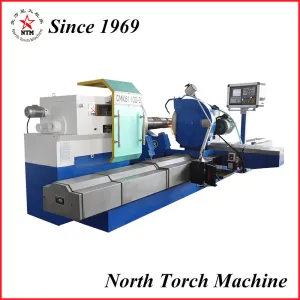
CNC Grinding Lathe
Category: Milling Grinding LatheBrowse number: 53Number:Release time: 2025-11-25 13:44:03CNC Grinding Lathe: Precision, Efficiency, and Applications in Modern Manufacturing The CNC grinding lathe is a cornerstone of modern precision manufacturing, combining the capabilities of computer numerical control (CNC) technology with advanced grinding and turning processes. This machine is indispensable in industries requiring ultra-precise components, such as aerospace, automotive, medical devices, and toolmaking. Below, we explore its features, advantages, applications, and future trends in detail. --- 1. What is a CNC Grinding Lathe? A CNC grinding lathe integrates gri...
News
Category:
No search results found!
Case
Category:
No search results found!
Video
Category:
No search results found!
Download
Category:
No search results found!
Job
Category:
No search results found!
Featured Products
-
NEWS
CNC Grinding Lathe
Learn more



 Phone
Phone